Among Neighbors
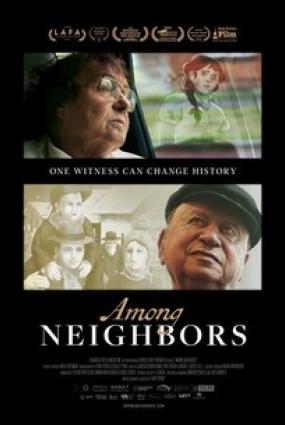
Among Neighbors
Documentary
Director: Yoav Potash
Interviewed: Yaacov Goldstein, Pelagia Radecka and Stanislava Bachanek
Cinematographer: Jacek Knopp
Running Length: 100 Minutes
Rating: not rated but beware of scenes of warfare
Documentary
Winners at San Francisco Film Festival, Los Angeles Film Festival, Warsaw Poland Film Festival and Austin, TX Film Festival
This documentary by Yoav Potash, is deeply sensitive in meaning. What a person has seen, what they remember, and what they choose to forget or replace in their minds, is crucial. During WWII in the Polish town of Gniewoszow, lived many members of the Jewish faith. Life had been simple before, neighbors helping neighbors, as in “I can’t sew a seam in a coat but down the street is a tailor (Jewish) who can do it.” Life goes on, until the Nazi regime began killing people. Then, what to do? Speak up? Step to the side quietly and look the other way? It is now years later, and truths come out. Using music and animation, Yoav Potash gives the story of what happened toward the end of the war when members of the Jewish population were vanishing. No one saw anything?
As people speak of their experience during WWII, the audience begins to see that being a “patriot” gave that person some protection during the war, but did nothing to help the Jewish neighbor next door. Witnesses give descriptions of happenings, but perhaps something is left out that the person does not want to remember, so the statement is actually flawed. The graveyard with repositioned headstones, for example. Animation is used to tell what happened in some sequences. This aids in carrying the film along and is a break in the tension of watching a war unfold in front of you
Focusing on this town gives the audience a chance to see what happened all through Germany/Poland. Just magnify this throughout that part of the world from 1930 and on.
To be a member of the Jewish faith meant a friend was only a name, true friendship that ran deep, doesn’t seem to exist. One person, Pelagia Radecka, tells of what she saw fatalities happen during the war, and she kept quiet until now, years and years later. It was safer to remain silent than tell the truth. Silence is not always golden, it can be rust-covered, too.
Copyright 2026 Marie Asner